
Missing Teeth? Here’s How a Dental Bridge Can Help

A missing tooth can influence the way you eat, speak, and interact with others. Many people adapt by avoiding certain foods or hiding their smiles. The good news? Modern dentistry offers solutions that restore comfort, function, and confidence, allowing you to enjoy life without hesitation.

What Is a Dental Bridge?

A dental bridge is an individualized replacement for one or more missing teeth. It uses the teeth next to the space for support and fills the empty space with a lifelike crown. This restores your bite and keeps your other teeth from shifting out of place.

If you search for a dental office offering a dental bridge near you, you’ll find that many dentists recommend it as a dependable option for replacing missing teeth without surgery.

Types of Dental Bridges

Different patients have different needs. Your dentist will help you find the best type for your situation.

Common options include:

  • Traditional bridge – Employs crowns on the teeth on each side of the gap.
  • Cantilever bridge – Anchored to only one neighboring tooth when the other side is not available.
  • Maryland bridge – Utilize a metal or porcelain frame fused or bonded to the backs of the adjacent teeth.
  • Implant-supported bridge – Utilize dental implants instead of natural teeth for support.

If you look for tooth bridge services, you will learn that each style has its strengths, and the right choice depends on the location of the missing tooth, the health of the surrounding teeth, and personal preferences.

How a Dental Bridge Works

Think of a bridge as a team effort. The supporting teeth or implants serve as anchors. The replacement tooth, aka a pontic, fills the gap. This design distributes bite forces evenly so you can chew with ease.

Here’s the typical process:

  1. Assessment – The dentist examines your mouth and reviews your needs.
  2. Preparation – Supporting teeth are shaped for crowns or implant placement.
  3. Impressions – A precise mold captures your bite for a perfect fit.
  4. Temporary bridge – Protects your teeth until the permanent one is ready.
  5. Final placement – Your new bridge is secured, adjusted, and polished.

When you visit a local dentist or dentist in North Brunswick Township, NJ, you can expect this process to be explained clearly so you know what will happen at every stage.

Benefits of Choosing a Dental Bridge

Patients choose a bridge for more than appearance. It offers both practical and health-related advantages.

  • Restores chewing and speaking – You can eat your favorite foods again without discomfort.
  • Prevents shifting teeth – Keeps your bite aligned and reduces jaw problems.
  • Improves confidence – You smile without worrying about gaps.
  • Lasting solution – With proper care, a bridge can serve you well for years.

Replacing missing teeth helps maintain facial shape and stops extra strain on remaining teeth. These benefits are why so many people consider this treatment worth the investment.

Caring for Your Dental Bridge

A bridge needs the same care as natural teeth, sometimes even more. Food can get trapped around the crowns and under the pontic, so good hygiene is essential.

Simple care tips:

  • Brush twice each day with a soft-bristled brush.
  • Floss daily, using a threader or special bridge floss to clean underneath.
  • Rinse with antibacterial mouthwash to reduce plaque.
  • Schedule regular checkups for cleaning and inspection.

A healthy mouth ensures your bridge lasts longer and feels comfortable. When your dentist shares these habits, following them will protect your investment and your health.

Is a Dental Bridge Right for You?

A bridge is a strong option if you have one or more missing teeth and healthy supporting teeth or implants. It’s often a good fit for people who want faster results than implant surgery can offer.

You might be a candidate if:

  • You want a fixed (non-removable) replacement.
  • You have healthy gums and bone support.
  • You prefer a cost-effective solution compared to multiple implants.

Your dentist will review your bite, oral health, and lifestyle before recommending the best treatment. This ensures you get a solution that looks natural and feels comfortable.

Final Thoughts

Restoring missing teeth is about more than appearance; it’s about reclaiming comfort, confidence, and the freedom to enjoy life without limits. A well-crafted dental bridge can help you eat with ease, speak naturally, and smile without second thoughts. At KK Dental – North Brunswick, we are ready to help you take that step toward a healthier, fuller smile. Book your consultation today and start your journey to renewed confidence.

FAQs About Dental Bridges

How long does a dental bridge typically last?

Will acquiring a dental bridge be painful?

Can a dental bridge be repaired if it gets damaged?

What Are the Early Symptoms of Mouth Cancer?

A silent start doesn’t mean a harmless path. Mouth cancer often begins with small, easy-to-miss signs until it doesn’t. Understanding what to look for early can make all the difference. This blog walks you through the facts, symptoms, risks, and prevention steps. Stay informed. Stay ahead. What you learn today could protect your health tomorrow.

What Is Mouth Cancer?

Mouth cancer, or oral cancer, happens when cells in the mouth grow in ways they shouldn’t. This can include areas like:

  • Lips
  • Tongue
  • Inner cheeks
  • Gums
  • Roof of the mouth
  • Floor of the mouth

These changes often start small. At first, you might not even notice them. But over time, untreated mouth cancer can spread to other parts of the body. That’s why knowing the first signs is vital.

Why Early Detection of Mouth Cancer Matters

Early detection saves lives. When mouth cancer is found soon enough, treatments like surgery or radiation have better results and fewer side effects. In some cases, small lesions can be removed before cancer fully forms.

Here’s why early action is essential:

  • In the early stages, cancer is often easier to treat.
  • Delayed treatment can lead to the spread beyond the mouth.
  • Early diagnosis means a better quality of life after treatment.

Getting a mouth cancer screening during your regular dental visits helps your dentist spot issues before they grow serious.

Top Early Symptoms of Mouth Cancer to Watch For

Don’t wait until pain becomes unbearable. Many early signs of oral cancer appear without discomfort. Here are symptoms that deserve your full attention:

  • A sore or ulcer that doesn’t heal after two weeks
  • Red or white patches inside the mouth
  • A lump or thickening in the cheek
  • Persistent sore throat or hoarseness
  • Pain when chewing or swallowing
  • Numbness in the lips, chin, or tongue
  • Jaw stiffness or trouble moving the tongue
  • Loose teeth without a clear cause
  • Changes in how dentures fit

One or two of these on their own might seem like minor problems. But if you notice several, or if they persist, make an appointment right away.

When to See a Dentist or Doctor

If something feels off in your mouth for more than two weeks, reach out. Here’s when to book that visit:

  • If a sore or lump doesn’t go away
  • If you spot any red or white patches
  • If you experience unexplained pain or swelling
  • If swallowing becomes difficult
  • If you smoke or drink often, even small signs matter

Talk to a dentist in Somerset, NJ, if you’re unsure. Many dentists are trained to recognize early signs and can refer you to specialists when needed.

Who’s at Higher Risk for Mouth Cancer?

Certain habits and conditions increase your chances of developing mouth cancer. Knowing your risk can assist you to take proactive steps.

Higher risk groups include:

  • People who smoke or chew tobacco
  • Heavy alcohol users
  • Those with HPV (human papillomavirus)
  • People over 45, especially men
  • Individuals with a poor diet, low in fruits and vegetables
  • Those with a family history of oral cancer
  • People with long-term sun exposure (linked to lip cancer)

Even without clear risk factors, staying alert remains vital. Some individuals develop mouth cancer despite having no known risk factors. That’s why seeking oral cancer screening near you is a smart, and proactive step toward protecting your health.

How Is Mouth Cancer Diagnosed?

Your dentist may be the first to notice something unusual. That’s why dental checkups play such a big role in spotting cancer early.

Here’s how diagnosis usually works:

  1. Visual Exam: Your dentist looks for sores, patches, or lumps.
  2. Physical Touch: They may feel for masses under the skin.
  3. Dye or Light Tests: Some tools help highlight unusual cells.
  4. Biopsy: If something looks suspicious, a small tissue sample is sent to a lab.
  5. Imaging: In some cases, X-rays or CT scans help check for spread.

It all starts with you speaking up about any changes in your mouth or throat. Timely conversations lead to timely solutions.

Tips for Prevention and Oral Cancer Screening

While not all cases are preventable, many steps can lower your risk. Taking charge of your oral health puts you in control.

Smart habits to help prevent mouth cancer:

  • Quit smoking or using tobacco
  • Limit alcohol intake
  • Eat a diet rich in fresh seasonal fruits and vegetables
  • Use lip balm with sun protection
  • Get vaccinated for HPV
  • Keep up with dental checkups
  • Ask your provider about mouth cancer screening options

Screening doesn’t take long, and it’s painless. It’s one of the easiest steps you can take to protect your health.

If you’re unsure where to begin, we offer regular screenings and guidance for oral health. One conversation could make all the difference.

Final Thoughts

Early signs of mouth cancer deserve your attention, not delay. If something feels off, speak up. Timely care leads to better results and lasting peace of mind. Book your screening today with KK Dental – Somerset and take the first step toward protection. Your health matters. Act now, stay informed, and don’t let warning signs go unnoticed.

How Long Does a Smile Makeover Last and What Affects It?

Your smile can say so much about you—it boosts confidence, shows warmth, and lights up your personality. That’s why more people today opt for smile makeovers. A smile makeover treatment combines cosmetic dental procedures designed specifically to transform your smile. But how long do these remarkable results last? Let’s explore the lifespan of smile makeovers and what influences their durability.

1. Understanding the Typical Lifespan of a Smile Makeover

Every smile makeover is unique. Typically, the lifespan ranges from 5 to 15 years. However, some transformations can last even longer. It depends on the specific procedures you choose with a trusted dentist in North Brunswick Township, NJ, and how carefully you maintain them.

Common dental treatments for a smile makeover include:

  • Porcelain Veneers: Thin shells bonded to your teeth to hide imperfections, lasting between 10 and 15 years.
  • Dental Crowns: Custom caps covering damaged or discolored teeth, typically lasting 10 to 15 years.
  • Teeth Whitening: Brightens your teeth and usually lasts up to 2 to 3 years before needing touch-ups.
  • Orthodontics (Braces/Invisalign): Aligns crooked teeth, creating permanent structural improvements if retainers are used consistently afterward.

Because smile makeovers involve multiple customized procedures, their longevity varies widely. Some components may require periodic updates or touch-ups, while others provide long-term benefits. Discussing your personal goals clearly with your dentist ensures realistic expectations and tailored results.

2. How Dental Materials Influence Your Smile Makeover’s Longevity

Dental materials play a significant role in how long your smile lasts. Each material has distinct advantages, directly influencing durability and appearance.

  • Porcelain: Often used in veneers and crowns, porcelain closely resembles natural teeth, resists staining, and provides remarkable durability. Porcelain typically lasts the longest, often beyond 15 years, if properly cared for.
  • Composite Resin: Commonly chosen for affordability and quick application, composite resin is excellent for minor aesthetic fixes. However, it tends to be less durable, typically lasting around 5 to 7 years.

When choosing materials, consider:

  • Your lifestyle and eating habits
  • Budget constraints and long-term value
  • Aesthetics vs. durability

Discuss these factors openly during your initial consultation to find the best match for your lifestyle.

3. Lifestyle and Oral Hygiene: Their Crucial Role in Smile Makeover Durability

Even the highest-quality smile makeover won’t withstand neglect or harmful habits. Your daily routine significantly affects how long the improvements last.

Lifestyle habits affecting your smile makeover include:

  • Smoking and Tobacco Use: They discolor and degrade dental restorations quickly, shortening their lifespan significantly.
  • Coffee, Tea, and Wine: These beverages, if consumed regularly, stain teeth. Rinsing your mouth afterward reduces staining and preserves whiteness longer.
  • Biting Hard Foods: Chewing ice or biting on pens can chip veneers and crowns, reducing their lifespan considerably.

Maintaining excellent oral hygiene protects your investment. Essential tips include:

  • Brush twice daily with fluoride toothpaste.
  • Floss every day to prevent plaque buildup.
  • Use non-abrasive toothpaste to protect veneers.
  • Consider using a custom mouthguard if you grind your teeth at night.

Healthy habits go hand in hand with lasting smile makeover results. Your commitment to daily care dramatically extends their beauty and function.

4. The Impact of Regular Dental Visits and Professional Maintenance

Regular dental visits ensure your smile makeover remains in optimal condition. Consistent professional care prevents small issues from turning into big problems.

Here’s why routine visits matter:

  • Routine checkups allow dentists to catch subtle wear or small cracks early and apply preventive care.
  • Professional cleanings remove stubborn stains and plaque you can’t eliminate with regular brushing.
  • Regular checkups prevent serious conditions like gum disease that can shorten the lifespan of dental work.

To prolong the results of your smile makeover service, dentists typically recommend professional checkups and cleanings at least every six months. Consistency here is key. It not only maintains your makeover but also promotes overall oral health.

5. Individual Health Factors That Can Shorten or Extend Your Results

Your overall health and unique dental challenges significantly impact your smile makeover’s lifespan. Awareness of these factors helps you manage potential issues proactively.

Common individual health concerns include:

  • Teeth Grinding (Bruxism): Excessive grinding can crack or prematurely wear down veneers and crowns. A custom-fitted nightguard helps protect your investment.
  • Gum Disease: Healthy gums are crucial for supporting your teeth and any restorations. An untreated gum infection can cause tooth loss and compromised dental work.
  • Tooth Decay: Cavities forming beneath or around crowns can undermine their stability. Diligent oral hygiene and preventive dental visits significantly reduce this risk.

If you experience these conditions, communicate clearly with your dentist. They can recommend preventive strategies, treatments, or products that extend the lifespan of your smile makeover considerably.

Final Thoughts

Your smile makeover’s longevity relies on smart lifestyle choices, quality materials, and consistent dental care. To maintain lasting results, regular checkups with a reliable local dentist near you are essential. Schedule your personalized consultation with KK Dental – North Brunswick today and take the first step toward enjoying your beautifully transformed smile for years to come!

What Are the Advantages of Wearing Dental Braces?

Dental braces have become a familiar sight for both teenagers and adults. In the past, braces were seen primarily as something for kids. Today, adults are also recognizing their numerous advantages. Braces aren’t only about having a straighter smile; they also enhance your oral health, confidence, speech clarity, bite functionality, and help you avoid future dental complications.

Improved Oral Health and Hygiene

Misaligned teeth can compromise more than your appearance. Crowded or crooked teeth create tight crevices that trap food debris and give bacteria a place to thrive. Even meticulous brushing and flossing may not remove all the plaque that forms, raising the risk of cavities, gum disease, and lingering bad breath.

Orthodontic treatment—such as braces—straightens teeth and closes gaps, removing those hard-to-clean niches. With proper alignment, everyday brushing and flossing reach all tooth surfaces more effectively, lowering the chances of decay and periodontal problems while keeping your breath fresher.

Here’s how braces specifically benefit oral hygiene:

  • Significantly lower risk of developing cavities
  • Reduction in gum inflammation due to better hygiene
  • Fresher breath resulting from fewer food particles trapped between teeth

Investing in braces means investing in healthier teeth for life.

Enhanced Appearance and Confidence

Appearance matters. Your smile is what most people see first when they meet you at school, work, or when out with friends. The look of crooked teeth can make some patients feel self-conscious and as a result they may smile less or find themselves shying away from social interaction. Braces transform that dramatically by resolving any alignment problem and providing a beautiful smile.

The click from a half-hearted to a full-on smile can really boost your confidence. For teens, this shift can lead to less angst around social life and school. Grown-ups get professional and personal advantages when they feel good about their smiles, too.

Examples of real-life benefits include:

  • Adolescents who are not self-conscious about group pictures and social gatherings.
  • Mature who found confident during job interviews and presentations
  • Better self-confidence and general happiness that comes with better looking teeth.

By addressing alignment issues through dental braces treatment, you invest in a more confident and happier version of yourself.

Better Bite and Chewing Functionality

It isn’t just about looks when it comes to straightening teeth. Malocclusions such as overbites, underbites, and crossbites can make comfortable chewing a challenge. Misalignment of your bite can result in uneven chewing pressure being placed on your teeth, tooth erosion, difficulty eating, and long-term jaw pain.

Braces are specifically designed to handle these bite issues. They subtly shift your teeth into place, allowing your upper and lower jaws to mesh perfectly. Once your bite is properly aligned, chewing feels effortless and every meal becomes comfortable. Good chewing aids in digestion, allowing your body to absorb those nutrients better.

Key benefits of bite correction include:

  • Easier chewing and a more enjoyable eating experience
  • Reduction or elimination of jaw pain caused by misaligned bites
  • Less strain on teeth, protecting them from unnecessary wear and tear

Correcting bite alignment enhances not only your oral comfort but your overall health.

Prevention of Future Dental Issues

Taking proactive steps today can prevent severe dental issues tomorrow. Misaligned teeth increase the likelihood of future problems like tooth damage, gum recession, and temporomandibular joint (TMJ) disorders. Chronic jaw pain, headaches, and enamel erosion are common issues caused by untreated alignment problems.

Wearing braces at an early age, or even as an adult, prevents these complications. By ensuring your teeth and bite align correctly, braces protect your dental health long-term. They minimize unnecessary stress on teeth and jaws, avoiding future costly procedures like crowns, bridges, or even surgeries.

Specific ways braces protect your dental future:

  • Prevention of tooth wear, chipping, or cracking due to uneven bite pressures
  • Reduced likelihood of developing TMJ disorders or jaw discomfort
  • Long-term financial savings by avoiding expensive restorative procedures

A skilled dentist in Edison, NJ, can discuss precisely how braces can help you avoid costly and painful dental issues down the road.

Speech Improvement

There are many people who do not necessarily know how closely the alignment of their teeth and the smoothness of their speech are connected. Teeth are involved in making sounds and pronunciations. The misaligned or improperly positioned teeth are the most common cause of speech issues, such as lisping or slurring when pronouncing some words. Such speech difficulties may lead to impaired communication, and maybe even in social and/or professional situations, cause embarrassment or lack of confidence.

Orthodontic treatment, including braces, can significantly improve your speech clarity. By aligning your teeth properly, braces allow your tongue and lips to form sounds correctly. This makes your speech clearer, improving overall communication skills and confidence when speaking publicly.

Common speech improvements seen after braces:

  • Correction of lisps due to spacing or overcrowding issues
  • Improved pronunciation of challenging sounds like “s,” “t,” and “z”
  • Greater ease when speaking, resulting in improved confidence during conversations or presentations

If speech issues due to misaligned teeth are a concern, searching for dental braces near you is an excellent first step towards clearer speech and greater confidence.

Final Thoughts

Choosing dental braces provides benefits far beyond a beautiful smile. You’ll enjoy improved oral health, increased confidence, clearer speech, better chewing functionality, and protection against future dental complications. Don’t wait to experience these life-changing advantages. Schedule a consultation with KK Dental Edison today and take your first step toward a healthier, happier, and more confident version of yourself!

What is a Mini Smile Makeover?

A mini smile makeover in Somerset is a fast, effective way to refresh your smile using minor cosmetic treatments. Unlike full smile makeovers that often involve intensive procedures, mini versions are quick, subtle, and cost-effective. Think of it like upgrading your smile without tearing the whole thing down. Perfect for those who want to enhance their appearance with minimal intervention.

1. Understanding a Mini Smile Makeover

A mini smile makeover is like a refresh button for your teeth. It’s not about changing everything. It’s about refining the details, those little flaws that may bug you when you see a photo or catch your reflection.

Here’s what it usually includes:

  • Two or more simple cosmetic procedures are done together.
  • Little to no recovery time.
  • Instant improvement in how your smile looks and feels.

If your teeth are mostly healthy but have some minor imperfections, say, a small chip on one tooth, a little discoloration, or uneven edges, this might be the ideal fix.

2. Common Treatments Involved in a Mini Smile Makeover

Not every makeover is the same. Your dentist will choose the right treatments based on your specific needs.

Here are the most popular treatments:

    • Professional teeth whitening

For yellow or stained teeth. This quick procedure can brighten your smile by several shades in one session.

    • Dental bonding

Used to fix chips, cracks, or gaps. The dentist applies a tooth-colored resin that hardens and blends in naturally.

    • Enamel contouring

Also called reshaping. It involves gently sanding down uneven or rough edges.

    • Clear aligners

Short-term orthodontics for slight misalignment. Not everyone needs braces sometimes; just a few months of clear aligners can fix minor crowding.

    • Composite veneers

A non-invasive alternative to porcelain veneers. They cover discoloration or mild shape issues without removing much of the tooth.

Each makeover is fully personalized. That’s what makes it so effective.

And if you’re looking for a dentist in Somerset to guide you through the options, you’ll want someone who listens and tailors treatments to your exact goals.

3. Benefits of Choosing a Mini Smile Makeover

You might wonder why you’d pick this over a full cosmetic plan. Here’s why:

    • Faster treatment

Most mini makeovers are done in one or two appointments.

    • Cost-effective

You save money because you’re only fixing what needs fixing.

    • Minimal downtime

You can usually go back to work or school the same day.

    • Subtle but impactful results

You won’t look like you got “work done.” You’ll just look refreshed, healthier, and more confident.

    • Boosts your self-esteem

Even the smallest changes, like a whiter smile or reshaped edge, can make a big difference in how you carry yourself.

These benefits explain why more people are skipping the full smile overhaul and choosing quicker, simpler options.

4. Ideal Candidates: Is a Mini Smile Makeover Right for You?

This type of makeover isn’t for everyone. It’s best for people with:

  • Minor aesthetic issues.
  • Healthy gums and teeth.
  • No large gaps, missing teeth, or major bite issues.

If you’re mostly happy with your teeth but just want to polish them up a bit, you’re probably a great fit.

This approach isn’t for people needing crowns, implants, or jaw corrections. For those cases, a full cosmetic or restorative plan may be more appropriate.

But here’s the good news:

You can find out if this makeover suits you with just one consultation. A dentist near you can evaluate your needs and walk you through what’s possible and what isn’t.

That way, you’re not guessing. You’re making an informed choice.

5. How to Maintain Your New Smile After the Makeover

Once your smile gets a mini makeover, you’ll want it to last. After all, these improvements deserve good care.

Here’s how to keep your smile shining:

    • Brush and floss daily

Sounds simple, but consistency is everything.

    • Use fluoride toothpaste

Helps protect enamel and strengthen teeth over time.

    • Avoid staining drinks

Coffee, wine, and tea limit these if you just had your teeth whitened.

    • Don’t bite on hard objects.

No chewing ice or using your teeth to open packages. Bonding and veneers can chip if you’re not careful.

    • See your dentist regularly

Twice-a-year cleanings help extend the life of your results.

Your new smile is an investment. Treat it like one. The better you care for it, the longer it will keep looking amazing.

And if you ever notice any wear or dullness, a quick touch-up can bring things back to life.

Final Thoughts

A mini smile makeover is a quick, effective way to upgrade your smile without extensive dental work. With quick treatments and noticeable results, it’s perfect for anyone wanting a confident boost. At KK Dental – Somerset, we’re here to help you smile brighter. Book your consultation today and take the first step toward a refreshed, natural-looking smile.

What Are the Benefits of Having Braces?

Braces aren’t just for looks; they play a huge role in keeping your teeth and bite healthy. From improving alignment to making everyday hygiene easier, braces offer long-term benefits that go beyond a straighter smile. If you’re thinking about starting orthodontic treatment, this blog will walk you through exactly why it’s a smart, worthwhile decision.

Improved Dental Alignment and Bite Function

Misaligned teeth can make life harder in ways most people don’t even notice—until it’s fixed. That’s where braces come in.

Braces steadily guide teeth into their ideal alignment over time. They help fix:

  • Crowded teeth that overlap
  • Gaps between teeth
  • Twisted or rotated teeth
  • Teeth that stick out too far

But alignment is more than just what your teeth look like. It’s also how they work together. A poorly aligned bite, whether it’s an overbite, underbite, or crossbite, can cause real problems.

With the help of tooth braces services, orthodontists can guide your jaw and teeth into harmony, making chewing and speaking smoother and more comfortable.

Here’s what proper alignment improves:

  • Chewing efficiency: You’ll bite and chew more evenly, reducing stress on certain teeth.
  • Speech clarity: Pronunciation improves when your tongue and teeth align better.
  • Jaw relief: Proper bite reduces muscle strain, lowering your chances of TMJ pain or tension headaches.

Alignment isn’t just a cosmetic fix. It’s a major upgrade for how your mouth functions every day.

Prevention of Future Dental Issues

Here’s the deal: crooked teeth are harder to clean. That’s not an opinion, it’s a fact. If your teeth are too close together, food gets trapped, plaque builds up, and cavities get a head start.

Braces help you dodge that mess.

Some long-term problems braces help prevent include:

  • Tooth decay
  • Gum inflammation and periodontal disease
  • Uneven wear on enamel
  • Tooth grinding (which often happens when the bite is off)
  • Chipped or cracked teeth due to misalignment

Fixing these issues later costs more financially and physically. You might need crowns, root canals, or even extractions down the road.

By getting braces now, you save yourself a lot of stress and dental bills later. It’s an investment in your future health, not just your present smile.

Boosted Self-Confidence and Mental Well-being

Let’s talk confidence. A lot of people feel shy or insecure about their smiles, especially during school, dating, or career milestones. That discomfort sticks with them.

Braces can change that.

For teens and even adults, having straighter teeth often leads to a major boost in self-esteem. People start smiling more. They laugh without covering their mouths. They stop dodging photos.

Here are some common changes patients notice after orthodontic treatment:

  • Feeling more confident in social settings
  • Increased comfort in public speaking
  • Better first impressions at work or interviews

Straight teeth don’t just impact your looks; they affect how you feel about yourself.

If you’re exploring dental braces near you, remember it’s not just about your mouth. It’s about your mindset, too.

Easier Oral Hygiene and Maintenance

Brushing and flossing should be quick and simple. But when your teeth are crooked, it becomes a daily struggle. Food hides between crowded teeth. Plaque forms faster in hard-to-reach spots. That’s when the problems start.

Braces help eliminate those trouble areas. Once your teeth are properly aligned, your toothbrush and floss can reach every surface more easily.

You’ll notice these changes:

  • Less plaque buildup
  • Healthier gums
  • Fresher breath
  • Fewer trips to the dentist for fillings

Oral hygiene gets easier when you’re not fighting against your own anatomy. Once the braces come off, many patients are amazed by how quickly their routine becomes.

Talk to a dentist in North Brunswick Township, NJ, to learn how braces might improve your daily hygiene habits. Clean teeth last longer. It’s that simple.

Wide Range of Brace Options for All Lifestyles

Gone are the days when metal braces were your only option. Today’s orthodontics is customizable, discreet, and designed for comfort.

Here’s a quick breakdown of what’s available:

  • Traditional metal braces – Still the most effective for complex cases. Modern designs are sleeker and more comfortable than ever.
  • Ceramic braces – These blend with your natural tooth color, making them less noticeable.
  • Lingual braces – Attached behind your teeth, hidden from view. Great for professionals or those self-conscious about appearance.
  • Clear aligners – Removable trays like Invisalign that are nearly invisible. Great for mild to moderate adjustments.

Each of these comes with its own advantages. Your orthodontist will help you choose based on your lifestyle, budget, and treatment goals.

Modern braces are also more comfortable, thanks to thinner wires and lighter pressure. Many even let you personalize with colored bands, which are fun for kids and teens!

No matter your age or concern, there’s a braces solution that fits your life.

Final Thoughts

Braces offer more than a beautiful smile. They correct bite issues, prevent future dental problems, improve your confidence, and make daily hygiene easier. With today’s modern options, getting braces is more convenient and comfortable than ever.

KK Dental – North Brunswick offers orthodontic solutions shaped around you, creating a strong, confident smile that endures. Schedule a consultation with your orthodontist today.

What is Ridge Preservation in Dentistry?

When a tooth is lost, the empty socket left behind doesn’t just sit idle. It begins to shrink. This bone loss can mess with your smile, jaw shape, and future dental work. That’s where ridge preservation steps in as a smart, preventive step many dentists take after tooth extraction. If you’re considering dental implants or facing an extraction soon, you’ll want to keep reading.

Understanding Ridge Preservation – The Basics

Let’s break it down. Ridge preservation is a procedure your dentist performs right after extracting a tooth. Think of it as a way to save your jawbone from sinking or collapsing where the tooth once lived.

Here’s what it usually involves:

  • After removal, the empty socket is carefully cleaned.
  • A bone graft material, either synthetic, from a donor, or from your own body, is placed into the empty space.
  • A barrier membrane may be added to protect the site.
  • Everything is stitched closed to allow for healing.

This simple step keeps your bones from shrinking too quickly. It also saves you from needing more invasive bone grafting later. Most people don’t even realize how important this is—until it’s too late.

Unlike traditional bone grafts, which are done months or years after a tooth has been lost, ridge preservation is immediate. And yes, that timing makes a big difference.

Why the Jawbone Shrinks After Tooth Loss?

Your jawbone is a living thing. It reacts to change. When a tooth is extracted, the jawbone no longer feels the pressure of chewing, and it begins to resorb.

Here’s what happens:

  • Blood supply in the area decreases.
  • The body reabsorbs the bone it no longer “needs.”
  • Over time, this causes the ridge—the part of your jaw that holds teeth—to lose height and width.

This bone loss doesn’t just cause cosmetic issues. It also:

  • Makes it harder to place dental implants later
  • Alters facial symmetry
  • It can affect how dentures fit.

When patients don’t opt for ridge preservation, they often end up returning for a more complicated fix. That’s why ridge preservation services aren’t just “extra.” They’re essential.

Ridge Preservation and Dental Implants – A Critical Link

Thinking about getting implants in the future? Ridge preservation gives you a serious head start. Here’s why:

  • It preserves bone volume. That’s crucial for implant stability.
  • It maintains the natural contours of your gum line, helping the final result look more like your original tooth.
  • It often shortens treatment time. With healthy bone already in place, you might not need an extra graft later.

Let’s say you wait. Now you want implants, but your jawbone has already shrunk. Suddenly, you’re looking at extra surgery, longer healing, and more costs. Instead, one simple decision at the time of extraction can set you up for success.

If you’re talking with a dentist in 95661 about replacing a tooth, ask if ridge preservation is part of their treatment plan. It’s not always routine, but it should be.

The Ridge Preservation Procedure – Step by Step

Here’s what most patients want to know:

“Will it hurt?”

Not really. Most people say it feels just like a normal extraction.

Let’s walk through it:

  1. Tooth extraction – done under local anesthesia.
  2. Socket cleaning – your dentist removes any infected or damaged tissue.
  3. Bone graft placement – the graft material is packed into the empty socket.
  4. Membrane placement – a small cover may be added to protect the graft.
  5. Suturing – the gum is stitched to help healing begin.

You’ll leave with a few stitches, some mild soreness, and detailed aftercare instructions. Most people return to work the next day.

And yes, sedation options are available if you’re nervous. Some dentists offer nitrous oxide or oral sedatives to help you stay calm.

Common myths:

  • “It’s only for old people.” Nope. Ridge preservation is about prevention, not age.
  • “It’s experimental.” Not at all. It’s a well-documented, widely used procedure.
  • “It adds a ton of cost.” Actually, it often saves money by avoiding future grafts.

Benefits and Risks of Ridge Preservation

Let’s be real, no dental procedure is 100% without risks. But the benefits here often outweigh the minimal downsides.

Benefits:

  • Keeps your facial structure intact
  • Helps maintain your gum line’s natural appearance
  • Simplifies future dental implant procedures
  • Reduces the need for complex bone grafting later
  • Boosts confidence by preserving your smile shape

Risks or limitations:

  • Mild infection if aftercare isn’t followed
  • Occasional graft rejection (rare)
  • Slightly higher upfront cost compared to extraction alone
    It may not work if there’s already too much bone loss

That’s why it’s essential to go with someone experienced. A skilled dentist in Edison, NJ, will not only perform the procedure but also walk you through every step with clarity and care.

Final Thoughts

Ridge preservation isn’t just another dental add-on—it’s a smart step toward a healthier, more stable smile. Whether you’re losing a tooth due to decay, trauma, or disease, preserving your jawbone can make a world of difference.

At KK Dental Edison, we believe in protecting your oral health not just for today, but for tomorrow too. Schedule your appointment now.

Same-Day Crowns at KK Dental

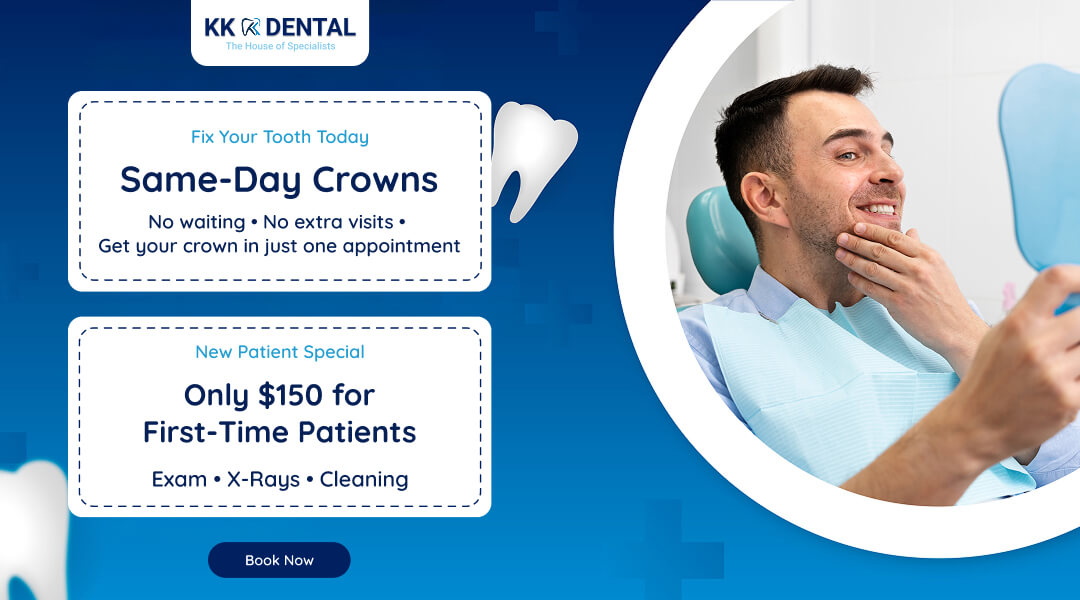
At KK Dental, we understand that your time is valuable, which is why we provide same-day dental crowns to make your experience more convenient. Whether you’re dealing with a damaged tooth or need to restore your smile, our same-day tooth crown service ensures you leave our office with a restored tooth in just one visit.

What Are Same-Day Crowns?

A same-day dental crown is an advanced restorative solution that allows us to fix damaged or decayed teeth quickly and efficiently. Traditionally, getting a crown required multiple visits to the dentist. However, with our innovative technology, KK Dental can create and place your crown in a single appointment.

Using CEREC technology, we design and manufacture your crown in our office while you wait. This means no temporary crowns or waiting for weeks for your permanent restoration. You’ll walk out with a fully restored tooth on the same day—ensuring a faster recovery time and a more comfortable process.

Benefits of Same-Day Crowns

  1. Speed and Convenience

At KK Dental, we know how busy life can be. That’s why our same-day tooth crown service is designed to save you time. Instead of scheduling multiple visits, you can get the treatment you need in a single trip, without the inconvenience of temporary restorations.

  1. Advanced Technology

Our state-of-the-art CEREC machine lets us create a customized crown that fits perfectly and looks natural. This advanced technology ensures your crown matches the shape, size, as well as  color of your original teeth, hence making it indistinguishable from the rest of your smile.

  1. Durable and Long-Lasting

With same-day dental crowns, you’re getting a high-quality restoration that is both durable and long-lasting. The materials used are strong and resistant to wear, so your crown will function just like a natural tooth for years to come.

  1. No Temporary Crowns

Unlike traditional crown procedures, where you would need to wear a temporary crown while you waiting for the permanent one, KK Dental offers immediate results. Our same-day tooth crown dentist will ensure your permanent crown is placed in one visit, so you can save the discomfort and inconvenience of temporary solutions.

  1. Fewer Dental Visits

A typical crown procedure can involve multiple visits, but with our same-day dental crown near you, we eliminate the need for follow-up appointments. This makes your dental care more efficient and ensures you’re back to your regular routine as quickly as possible.

How Same-Day Crowns Work?

The process of getting a same-day crown at KK Dental is simple and efficient. Here’s what you may expect during your visit:

  1. Examination and Preparation

First, your dentist will carry out a detailed examination to ensure that a same-day crown is the right solution for you. If you have a damaged or decayed tooth, we’ll prepare the tooth by eliminating any decay or damaged areas.

  1. Digital Scanning

Instead of traditional molds, we use digital scanning to capture an accurate 3D image of your tooth. This secures a perfect fit for your crown and eliminates the discomfort of mold impressions.

  1. Design and Customization

Once we have the digital scan, our CEREC machine takes over. The software will help design your crown to match your tooth’s size, shape, and color. Our dentist will then approve the design, ensuring it fits your needs perfectly.

  1. Milling the Crown

The crown is then milled from a single block of ceramic in our office. This process typically takes about 15-20 minutes, and you can relax while your crown is being created.

  1. Final Placement

Once the crown is all ready, your dentist will properly check the fit and make any final adjustments. The crown will be permanently linked to your tooth, restoring its strength and appearance.

Why Choose KK Dental for Same-Day Crowns?

When it comes to dental care, you want a nearby dentist who understands your needs and offers solutions that fit into your busy life. At KK Dental, we are committed to providing top-quality dental services with a focus on convenience, efficiency, and comfort. Here are a few reasons why you should choose us for your same-day dental crown near you:

Experienced and Caring Team

Our team at KK Dental consists of experienced professionals who are extremely dedicated to providing the highest level of care. We absolutely understand that dental procedures can be really intimidating, so we prioritize your comfort throughout the process.

State-of-the-Art Technology

We invest in the modern, latest dental technologies, including CEREC, to provide you with cutting-edge solutions. Our same-day tooth crown service ensures you receive the best possible care in the shortest time.

Convenient Location

We are conveniently located for residents in the area, making it easy for you to access our services. Whether you need a same-day dental crown near you or any other dental treatment, KK Dental is here to help.

Affordable Care

We truly believe that high-quality dental care should be accessible. At KK Dental, we offer competitive pricing and various payment options to make your treatment as affordable as possible.

When to Consider Same-Day Crowns

A same-day crown can be an excellent solution if:

  1. You have a cracked, chipped, or broken tooth that needs immediate repair.
  2. You have a large filling that needs to be replaced with a more durable and aesthetic solution.
  3. You’re looking for a fast, convenient way to preserve your smile without the hassle of multiple appointments.

If you’re unsure whether a same-day crown is the right option for you, our team at KK Dental can help you assess your needs and determine the best course of action.

Schedule Your Appointment Today

If you’re looking for a same-day tooth crown dentist that can provide fast, high-quality dental care, look no further than KK Dental. Our skilled team is always ready to help restore your smile in just one visit.

Contact us today to schedule your consultation and learn more about how same-day dental crowns can help you achieve the smile you’ve always wanted. Whether you’re dealing with a damaged tooth or simply need a restoration, we’re here to provide you with the best care possible.

Invisalign Benefits: More Than Just a Beautiful Smile

Invisalign® offers more than aesthetic enhancement—it brings lasting benefits to your overall oral health and daily comfort. While it effectively straightens teeth, its impact extends to improved function, hygiene, and confidence. This advanced orthodontic solution is designed for those seeking a seamless blend of appearance and practicality. Discover how Invisalign® can contribute to a healthier, more balanced lifestyle.

The Advantages of Invisalign® Beyond a Great Smile

Most people see Invisalign® as a way to straighten their teeth. That’s true, but the change goes deeper. These aligners can boost oral hygiene, support better function, and even reduce the stress that crooked teeth can place on your bite. You’re not just improving appearance; you’re investing in total oral health.

Some of the unexpected benefits include:

  • Easier brushing and flossing
  • Fewer food traps between teeth
  • Less strain on your jaw
  • Fewer office visits than metal braces
  • Boost in self-confidence during treatment.

Improved Oral Health Through Straighter Teeth

When your teeth are crooked or overcrowded, it’s easy for plaque to build up. Tight spots can make brushing and flossing feel like a chore. This buildup leads to gum problems, tooth decay, and even bone loss.

Straight teeth offer cleaner spaces between them, which makes cleaning easier. Aligners like Invisalign move teeth slowly and safely into better positions. This change supports a healthier mouth long-term.

With clear aligners, you don’t need to struggle with flossing under wires. You simply remove the trays, brush, floss, rinse, and pop them back in. Simple, right?

If you’re searching for a dentist near you who can help you maintain healthier teeth during alignment treatment, make sure they’re experienced in clear aligner care.

Enhanced Comfort Compared to Traditional Braces

Remember the poking wires and sore cheeks from old-school braces? With Invisalign, there are no metal brackets, no wires, and no tightening appointments.

These aligners are smooth. They’re made from medical-grade plastic that fits your mouth snugly. You won’t deal with sharp edges or food getting stuck in hardware. Most patients find themselves forgetting they’re wearing anything at all.

Instead of monthly wire tightening, you change to a new set of aligners every couple of weeks. It’s a steady, gentle shift. That means less pain—and less anxiety about office visits.

Discreet Appearance for Adults and Teens

Braces are effective, but many adults hesitate to wear them. Teens worry about standing out at school. Invisalign offers a near-invisible option that fits into your routine without drawing attention.

Because the aligners are clear, most people won’t even know you’re wearing them. You can smile, laugh, talk, and go to work or school without second-guessing how you look.

Teens can also benefit from a built-in blue indicator on each aligner that helps track wear time, giving both them and their parents peace of mind.

If you’ve been holding off on orthodontic care because of how metal braces look, this might be the perfect time to visit a Somerset dentist who offers Invisalign.

Fewer Office Visits and Time-Saving Convenience

Life moves fast. Between work, errands, family, and trying to find a minute for yourself, it’s not easy to squeeze in frequent appointments.

Traditional braces often require monthly trips to adjust wires or fix brackets. Invisalign skips most of that. You’ll get several sets of aligners at once and change them at home every two weeks. Check-ins are usually every 6–8 weeks, and they’re short and to the point.

Fewer appointments mean less time off work or school, and more control over your schedule.

If you’re busy and want a solution that works with your life, Invisalign is worth asking about. For those looking for Invisalign in Somerset, NJ, convenience and care go hand in hand at KK Dental – Somerset.

Better Bite and Jaw Functionality

Invisalign doesn’t only straighten teeth—it helps balance your bite. If your upper teeth and lower teeth don’t touch properly, it can lead to headaches, worn-down enamel, or jaw tension.

Misaligned bites (like overbite, underbite, or crossbite) put more pressure on certain teeth than others. Over time, this can lead to pain, grinding, and even jaw joint issues.

Clear aligners can correct these problems by guiding your teeth into better positions, allowing for smoother chewing and speaking.

Better bite function doesn’t just protect your teeth—it improves how your whole mouth works together. If you’ve noticed clicking in your jaw or frequent clenching, it’s time to consult a professional.

No Food Restrictions or Lifestyle Changes

Let’s be honest—no one likes giving up their favorite foods. With metal braces, that’s a reality. Popcorn, gum, crunchy chips, sticky candy, even biting into an apple—all off-limits.

With Invisalign, you remove the aligners when eating. No special diet. No food stuck in wires. No awkward chewing. Just eat what you normally would, brush your teeth, and put the trays back in.

This flexibility extends beyond food. You can take them out for special occasions, photos, or big presentations—then pop them back in when you’re ready.

People who live active, social lives love the fact that they don’t need to change their routines. If you’re looking to straighten your teeth without overhauling your lifestyle, ask your local dentist or a dentist in Somerset if Invisalign could be a fit.

Final Thoughts

Invisalign® offers more than cosmetic benefits—it supports a healthier, more confident lifestyle. With lasting comfort, easy care, and fewer appointments, it’s a smart choice for modern smiles. Ready to experience these benefits for yourself? Schedule a consultation with KK Dental – Somerset today and take the first step toward a straighter, healthier, and more confident you.

Preventing Gum Disease: Early Signs and Regular Care

Healthy gums often go unnoticed—until warning signs appear. Bleeding, soreness, or receding gums may seem harmless, but they often point to serious issues. Early detection and daily care play a powerful role in protecting your smile. Knowing what to watch for and how to act can help prevent lasting damage. Let’s break it down simply and clearly.

What Is Gum Disease?

Gum disease—also called periodontal disease—begins when bacteria build up in your mouth. Over time, this buildup can damage the tissues that hold your teeth in place. It starts small, usually with gum irritation or mild swelling. But when ignored, it progresses and can even lead to tooth loss.

There are two main stages:

  • Gingivitis – the early form. It causes red, swollen gums and bleeding. It’s common and usually reversible.
  • Periodontitis – more advanced. At this stage, the bone and fibers that support your teeth start to break down.

If you catch it early, treatment is simple. Wait too long, and the damage becomes permanent.

Why Early Detection Matters

Gum disease doesn’t always cause pain at first. That’s why people tend to overlook it. But by the time the signs become obvious, more damage has already been done.

Here’s what early detection helps with:

  • Stops bone loss
  • Keeps your natural teeth intact
  • Saves you from complex procedures later
  • Stops bacteria from spreading or travelling to other parts of the body

Seeing a local dentist or a dentist in North Brunswick, NJ, every few months ensures problems are caught before they cause long-term harm. A simple check today might save you from surgery down the line.

Warning Signs You Should Never Ignore

Your gums are always trying to tell you something. Learn to listen. When something feels off in your mouth, don’t brush it aside.

Watch out for these symptoms:

  • Bleeding when you floss or brush
  • Gums that feel sore or tender
  • Teeth appear longer due to gum recession.
  • Bad breath that doesn’t go away
  • Loose or shifting teeth
  • Pus around the gums
  • A change in your bite

If you notice any of these, don’t wait. Visit an oral surgeon in North Brunswick, NJ (if you are from that area), who can take a look at the seriousness of the condition and provide treatment options developed to your needs.

Daily Habits to Prevent Gum Disease

You don’t need fancy routines to keep your gums in shape. It’s the basics that work best. And doing them right—every day—matters more than doing them perfectly once in a while.

Add these to your routine:

  • Brush twice a day – Use a soft-bristled brush and aim for two minutes.
  • Floss once daily – Slide it gently between each tooth and along the gumline.
  • Use mouthwash – It helps reduce plaque and freshens breath.
  • Scrape your tongue – Bacteria love to hide there.
  • Stay hydrated – Saliva is a natural mouth cleaner.

Consistency is key. Skipping even a day lets bacteria multiply and settle deep in your gums.

The Importance of Routine Dental Visits

You can’t spot everything on your own. Plaque can build up in places your brush can’t reach. Dentists use special tools and years of training to detect problems early and keep your gums healthy.

Here’s what happens during a routine visit:

  • Thorough cleaning to remove tartar
  • Checking gum pockets for depth and inflammation
  • X-rays, if needed, to check bone levels.
  • Advice based on your current oral care routine

Regular cleanings every six months (or sooner if recommended) help stop oral health issues before they begin. It’s more than a cleaning—it’s your defense system.

Lifestyle Factors That Influence Gum Health

Sometimes, gum disease isn’t just about brushing and flossing. Your lifestyle can play a role too. What you eat, how much stress you’re under, and even how much you sleep can affect your mouth.

Some habits to rethink:

  • Smoking or chewing tobacco slows healing and hides early symptoms
  • Poor sleep weakens your immune response.
  • High sugar intake – fuels the bacteria that cause plaque
  • Chronic stress raises inflammation levels across your body.

Choosing a healthier lifestyle won’t just help your gums. It improves your full-body health. Small steps lead to long-term gains.

How to Care for Your Gums at Home

Home care isn’t just brushing and flossing. It’s about paying attention to how your mouth feels and making small changes to keep it healthy.

Here are some simple ways to protect your gums at home:

  • Use an electric toothbrush if manual brushing feels rough
  • Switch to a toothpaste with fluoride.
  • Avoid brushing too hard—it damages your gumline.
  • Eat fruits and veggies to help clean teeth.
  • Rinse after meals if brushing isn’t possible.

Certain health conditions, such as diabetes, can raise your chances of developing gum disease, so it’s important to keep your doctor informed and maintain regular checkups.

Final Thoughts

Gum health begins with small, consistent steps. Don’t ignore the early signs—act now to protect your smile. Regular care and the right support can make all the difference. KK Dental – North Brunswick provides treatment for gum disease in North Brunswick, NJ. We are here to guide you. Schedule your checkup today and take charge of your health before problems start. Your future smile depends on it.

Call Now Book Appointment
Click to listen highlighted text!