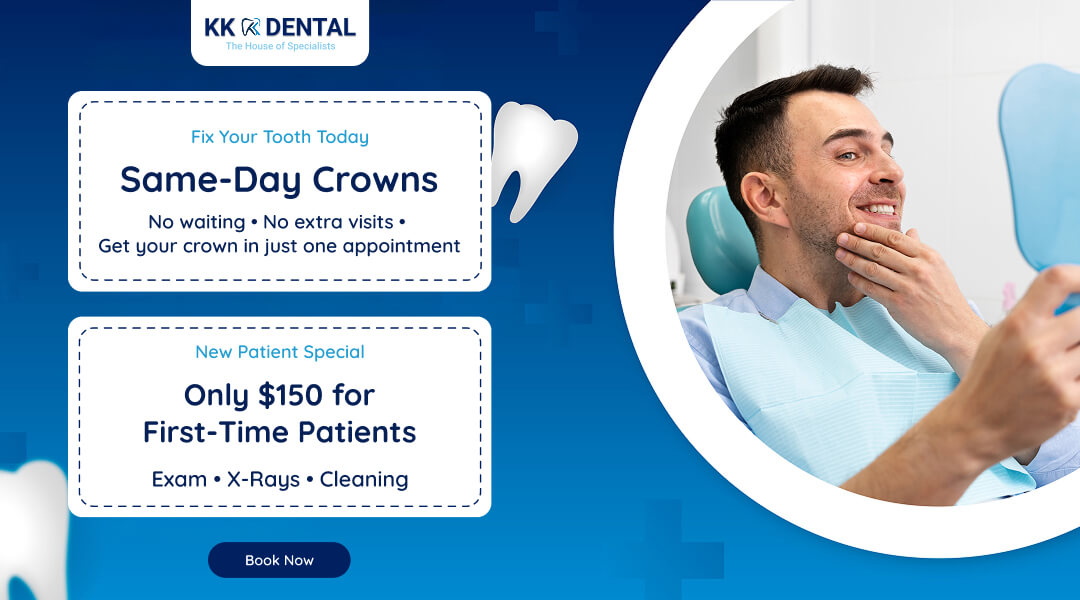


If you’re facing a damaged or decayed tooth and have been told you need a dental crown, you might be wondering what the process involves. At KK Dental in North Brunswick Township, NJ, we offer same-day crowns as a convenient and effective solution to restore your smile quickly and comfortably. In this guide, we’ll walk you through the same-day crown procedure step by step, so you know exactly what to expect when you visit the dentist.
How Does the Process Start?
Before your same-day crown procedure begins, the dentist will take a look at your tooth. This typically involves taking X-rays to have knowledge of the extent of the damage or decay and decide whether a crown is the best solution. If your tooth is severely damaged or compromised, a crown can shield it from further damage, restore its function, and enhance the appearance of your smile.
During this consultation, your dentist in North Brunswick Township, NJ, will explain the treatment options, including the benefits of same-day crowns, and answer any questions you may have about the procedure.
What Happens During the Tooth Preparation?
The first step in the same-day crown procedure is preparing your tooth. The dentist will start by making the area around the tooth to make sure you are comfortable throughout the process. Once the area is numb, the dentist will remove any ruined or damaged parts of the tooth. This is an essential step to ensure that the crown will fit properly and securely.
If the tooth is excruciatingly damaged, the dentist may need to build up the structure of the tooth before proceeding. This may involve the use of composite resin to ensure that the tooth is strong enough to support the crown.
How Is the Tooth Scanned for the Crown?
Once your tooth is prepared, the next step is capturing an image of your tooth using a digital scanner. This is where same-day crowns really shine. Traditional crowns typically involve taking messy impressions, but with same-day crowns, the dentist uses an advanced digital scanner to capture a 3D image of your tooth and the surrounding structures.
This digital impression or outline is far more accurate than traditional impressions and ensures that your crown will fit perfectly. The 3D scan is sent directly to a computer system that designs the crown, which can then be sent to the in-office milling machine to create the crown.
How Is the Crown Designed?
The design phase of the procedure is done using CAD (Computer-Aided Design) software. The dentist will use the digital impressions or outlines to design a crown that fits precisely on your prepared tooth. You’ll have the opportunity to review the design and make any necessary adjustments before the crown is manufactured.
The benefit of same-day crowns is that the design process is quick and efficient, meaning you don’t have to wait weeks to get your permanent restoration. The software allows the dentist to fine-tune the design, ensuring that it not only fits perfectly but also your surrounding teeth.
How Is the Crown Manufactured?
Once the design is finally ready, the data is sent over to a milling machine in the office that develops your crown. The milling machine carves out the crown from a ceramic block, ensuring that it has a precise fit and a natural appearance. The material used for same-day crowns is durable and designed to mimic the look of natural teeth, so it provides both functionality and aesthetics.
The milling process usually takes between 15 and 30 minutes, depending on the complexity of the design. During this time, you can relax while the machine creates your custom crown.
How Does the Dentist Ensure the Crown Fits Perfectly?
Once the crown is milled, the dentist will check its fit. This is an important step in ensuring that the crown matches your bite and doesn’t cause discomfort. The dentist will carefully put the crown on your tooth and assess how it aligns with the adjacent teeth. If necessary, adjustments will be made to ensure that the crown fits snugly and comfortably.
The dentist will also check the color of the crown to make sure it matches your natural teeth. If adjustments are needed, the crown can be polished and refined to achieve a seamless look.
What Happens When the Crown Is Ready?
After the crown is adjusted and checked for fit and aesthetics, the dentist will bond it to your prepared tooth. The crown is placed over the tooth and secured using a special dental adhesive. A curing light is used to harden the adhesive, ensuring that the crown stays securely in place.
Once the bonding material has set, the dentist will make a final check to make sure that the crown feels comfortable and aligns with your natural bite. The process is quick, and you’ll leave the office with a fully restored tooth.
How Long Does the Same-Day Crown Procedure Take?
One of the key upsides of same-day crowns is how swiftly the process can be completed. Unlike traditional crowns, which require two or more visits, same-day crowns are completed in just one visit, typically taking between 1-2 hours. This makes it an ideal option for patients who don’t want to spend multiple appointments in the dentist’s office or deal with the inconvenience of wearing temporary crowns.
What Should You Expect After the Procedure?
Once the crown is placed, you can return to your normal routine immediately. Since there’s no need for temporary crowns, you won’t have to worry about adjusting to an uncomfortable or poorly fitting restoration. After your same-day crown procedure, you should feel little to no discomfort.
Your dentist will give you instructions on how to take care of your crown. This typically includes maintaining a good oral hygiene routine and avoiding chewing on hard objects that could potentially damage the crown. It’s also important to avoid sticky foods for a few hours until the adhesive fully sets.
Are There Any Risks or Side Effects?
As with any dental procedure, there may be some risks or side effects. However, same-day crowns are generally very safe. Some patients may feel mild sensitivity or discomfort after the process, especially if the tooth was severely damaged. These symptoms usually subside within a few days.
If you experience any issues, such as discomfort, difficulty chewing, or conspicuous changes in the appearance of your crown, it’s important to contact your dentist near you, right away. Your dentist can make adjustments or changes to ensure your crown fits perfectly and that you’re comfortable.
Why Choose Same-Day Crowns at KK Dental?
At KK Dental, we offer same-day crowns that provide both convenience and quality. We use the latest digital scanning and milling technology to create precise, natural-looking crowns that restore your tooth’s function and appearance. Our team is dedicated to ensuring that your experience is as smooth and comfortable as possible, from start to finish.
Whether you’re looking for a quick solution to restore a damaged tooth or want to avoid the hassle of multiple dental visits, same-day crowns offer an ideal solution. Contact us today to schedule your consultation and find out how same-day dental crowns in North Brunswick Township, NJ can help restore your smile quickly and efficiently.