
All about Dental Crowns

There are a lot of people who have weakened their natural teeth due to accidents. There are several ways of fixing this problem, each with its pros and cons. One of the most used methods is dental crowns.

There are millions of people in the States alone who use dental crowns to replace their missing teeth or strengthen weakened teeth. This article will help you understand all about dental crowns.

What is Dental Crown?

A dental crown is a dental cap that is applied over the crown of someone’s tooth to provide it with additional strength. A dental cap can also be used to replace a missing tooth. Dental crowns are used to cover dental implants, and they can help those teeth made of artificial materials last for a longer time.

Other purposes of dental crowns include, restore broken teeth, cover as well as support teeth with large tooth fillings. The crowns can also cover severely misshaped teeth and can be used for cosmetic reasons.

Both adults and children can use crowns. In most cases, children’s crowns are made of stainless steel, and they usually come out on their own after permanent teeth have developed. They can help protect a child’s teeth from decay. Talk to your dentist and discuss the proceedings of the treatment for your child.

Types of Dental Crowns

There are several types of crowns, and the one right for you depends on your taste and affordability. These crowns are made of different materials, and we will discuss that in a moment.

Temporary Crowns

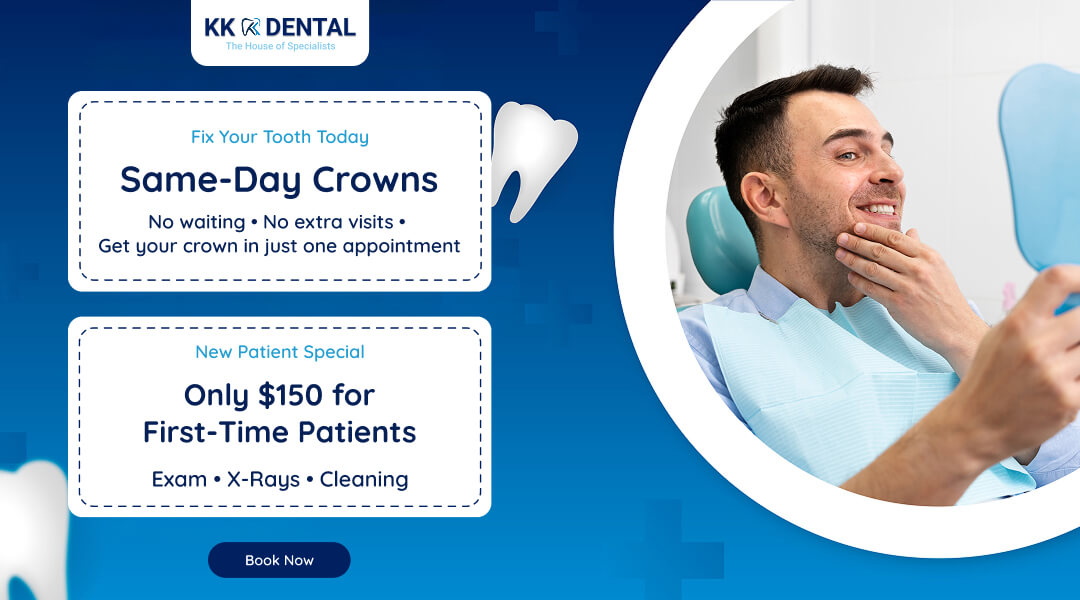
These crowns are made in the dentist’s office, and they are to be used until the permanent ones are ready. You can even find a One Day Crown in this category. A crown that you will wear for a day and come for the permanent crown the next day. You will be given a few instructions on how to take good care of the temporary crowns

Permanent Crowns

Permanent crowns are the ones made to provide support to weakened teeth or replace missing ones. They usually come at different prices since they are made of different materials. The quality of a permanent crown largely depends on the material used.

Materials Used in Crowns

When it comes to crowns, you’ll find different materials. Let’s have a quick look at the most common materials used in dental crowns.

Stainless Steel

Stainless steel is a prevalent material when it comes to making temporary crowns. Kids’ crowns are made of stainless steel. An adult can also use a stainless crown as he waits for a permanent crown to be made from another material.

A stainless steel crown usually covers the whole tooth and protects it against decay and infections. Stainless steel crowns are very comfortable, and they don’t require many visits to a dental clinic for checkups. It is no wonder they are perfect for kids.

Metal

Metal is another material used to make dental crowns. This material is highly recommended since it is very durable, and it provides enough strength to the weakened teeth. Crowns made of metal can either be made of platinum, gold, or base-metal alloy. A base metal alloy is, for example, nickel-chromium alloy.

Metal crowns don’t wear off easily, and they can withstand chewing and biting. They rarely break, and they last the longest. The only problem is the color of the metal is always visible. They are probably best for back teeth.

Resin

Dental crowns made of all resin are less expensive. The problem is they are very vulnerable, and they easily break. They last the shortest time.

Ceramic or Porcelain

Ceramic and porcelain crowns function the same. They easily match the color of your teeth, and they are effortless to take care of. If you are allergic to metal, all-ceramic crowns are the perfect alternative. Since they match the color of your teeth, they can be used for front teeth. They are more durable than resin crowns.

Porcelain-fused-to-metal

These crowns also match the color of your teeth. They are stronger than the ones made of just porcelain or ceramic. The only problem is with time porcelain wears out, and metal starts to show. They are a good choice for both back and front teeth.

KK Dental

Are you looking for a dentist in Somerset, North Brunswick, or Edison? If you are, KK Dental is the right place to be. We provide the best in-house treatment, and you can count on our expertise. We are open even in the evenings, and you can visit us during the weekends with an emergency. We offer discounts to our new patients! Welcome, all!

Tooth Extraction FAQs

Our permanent teeth are strong and designed to last for a lifetime. However, due to factors such as decay and accidents, the teeth may need to be extracted by an oral surgeon. It is important to note that extraction is not a general dental procedure. At KK Dental we perform teeth removal as a last resort when the teeth can’t be salvaged using other dental treatments.

When Do We Recommend Tooth Extraction?

Tooth extraction in adults is at times inevitable especially if you have any of the following dental problems:

  • Overcrowding can occur when the upper and lower jaw overlap or when you don’t have enough space in your mouth. Our dentist can recommend teeth pulling in preparation for orthodontia– a procedure done to align the teeth.
  • Impacted wisdom is the primary reason why we perform a tooth extraction. The wisdom teeth are the last to set in and sometimes they may become entrapped under the jaw. Tooth extraction is ideal not only because the wisdom causes pain, but also because they can affect your dental structure.
  • Dental decay can affect the pulp and teeth creating the need for an extraction. We primarily perform the root canal procedure to get rid of decay and infection. However, when the teeth are severely damaged, we can extract the teeth to save the dental structure.
  • Broken teeth can also require extraction if the structure, roots, and nerves beneath the teeth are severely damaged.
  • Periodontal diseases can cause teeth to weaken or loosen making tooth extraction procedures necessary.

What Does the Procedure Involve?

The extraction process is different depending on the severity of the dental problem. The procedure can either be simple or surgical. Simple extractions are straightforward and easily performed. The dentist will numb the gum with local anesthesia and using special pliers the teeth will be pulled. The dentist will then sanitize and stitch the gums to facilitate healing. These stitches disintegrate over time and don’t need another dental procedure.

Surgical extractions are more complicated and done on impacted wisdom teeth. Because of the complexity of the procedure, the dentist will give you IV sedation.

How Long Will the Gum Take to Heal?

Though the healing time will depend on the type of surgery and the location of the teeth, you should expect to recover in seven to 14 days. The recovery time at times can take longer as the bone grows in the gum.

What Can You Expect After the Procedure?

A blood clot will form in the extracted gum. The blood clot helps with healing and it is important to protect it. If the blood clot dislodges or breaks, it can expose the gum causing dry socket. Not only will it affect the healing process, but the socket can also cause bad breath and pain.

It is normal to feel slight discomfort after the anesthesia wears off. Furthermore, you will have swelling and residual bleeding 24 hours after the extraction. The bleeding will clear up on its own, however, if it doesn’t stop four hours after the procedure calls our dentist immediately.

Also watch out for infection symptoms, redness, excessive discharge, nausea, vomiting, shortness of breath, coughs, or chest pain.

What Can You Do to Promote Gum Healing Speed Up the Healing Time?

Aftercare will affect your healing time, so follow the dentist’s instructions. Here are a few tips:

  • Take pain relievers
  • Use ice packs to reduce swelling
  • Use saline water to rinse of the gum
  • Don’t use a straw to avoid breaking the blood clot
  • Elevate the head to stop bleeding
  • Eat foods that require less chewing
  • Brush and floss your teeth as you normally do, but avoid the site
  • Limit activity for 24 to 48 hours

What to Do After Extraction?

When the gaps in between your teeth are left unfilled, they can cause the surrounding teeth to shift thereby weakening the structure. It is recommended to fill the spaces with veneers, bridges, or dental implants. All these dental solutions can work, so speak to the dentist on which one is suitable for you.

Are Dental Implants an Ideal Solution?

Missing teeth are frustrating and create an unsightly appearance. Not only that, but they also can weaken your teeth and dental structure. Replacing your teeth, therefore, is imperative not only for your appearance but also your dental health.

Several dental treatments are available that can replace your missing teeth from veneers to bridges. However, if you are looking for a long-term and permanent treatment, then dental implants are ideal. Yes, the implants may be costly and have a lengthy process, but they are a worthwhile investment if you are looking for durable dental solutions.

What Are Dental Implants?

Dental implants are metal posts made of titanium screws that act as roots, an abutment, and a crown. These screws are surgically fixed on the jawbone in a procedure that is pain-free.

Although the implants are effective, they are not for everyone. You need to be eligible for the implant surgery to be done.

  • Be 16 years and older
  • Have a healthy gum and teeth free of cavities
  • Sufficient bone density to support the implants

What Are the Different Dental Implant Types?

Several dental implant types are available and our dentist will choose suitable implants based on your dental health.

  • Endosteal implants or traditional implants are fixed into the jawbone
  • Subperiosteal implants are placed above the jawbone and are ideal for people with sufficient bone loss and don’t want a bone graft to rebuild the bone.
  • Mini dental implants can support one tooth or dentures and bridges
  • All-on-4 implants that are ideal if you are missing multiple teeth

What Does the Procedure Involve?

The dental implant procedure is done in several stages;

  1. Initial consultationOur dentist will perform a comprehensive assessment of your teeth and gums and create an ideal treatment plan.Next, the dental implants will be fixed in a procedure that lasts for one to two hours. The healing process can take seven months or longer depending on if you get a gone graft or not.

    A bone graft or augmentation is done when you have sufficient bone loss and need it rebuilt.

  2. Second appointmentThe second appointment is set after the bone has fused to the bone. The abutment or connector is placed to support the implant and crown, and your teeth impression will be taken for modeling. Finally, the dentist will fix a temporary crown to facilitate the healing of the tissues.
  3. The final appointmentThe dentist replaces the temporary crown with the permanent ones by either cementing or screwing them into the implants.

What to Expect After the Procedure?

You will feel slight pressure and discomfort, and bleeding on the first day. The bleeding should stop after 30 minutes, but if it doesn’t, you should come for an assessment and treatment.

Other symptoms include swelling, pain, and oozing, but these symptoms will clear on their own.

During the healing period, try to avoid hard, spicy, and acidic foods. Furthermore, gently brush the teeth, use saline water for rinsing the mouth, and apply ice to reduce the discomfort.

Are There Any Problems with Dental Implants?

Yes. Although dental implants are successful, there is a five percent possibility they could fail. Several factors can affect the success such as:

  • Gum disease and infection
  • Bruxism or the unconscious of the teeth
  • Loose implant because of bone loss
  • Nerve damage
  • Rejection of the implant. Though rare, your body can reject the implant if it fails to fuse properly to the bone. When the implant fails, the dentist can perform another procedure to fix them
  • Loose crown
  • Bruising from drilling

What Are the Benefits of Dental Implants?

  • The surgery is pain-free
  • It is long-lasting if done by a certified dentist and with proper dental care.
  • The implant and the crown mimic your natural teeth and therefore are unnoticeable
  • It is easy to care for the natural teeth
  • The implants preserve your jawbone and protect your teeth

Schedule an Appointment

Dental implants offer a long term solution and can preserve both your natural teeth and jawbone. However, you need to be eligible for the procedure, so call us to schedule an appointment. We will assess and evaluate your eligibility and create a personalized treatment.

Four Great Dental Care Tips

Taking care of your teeth at home is one of the most effective ways to prevent dental problems in your day to day life. Minor issues, such as bad breath, and more serious concerns, like cavities, all have their roots in our diet, our dental hygiene practices, and how seriously we take our own oral health.

  • See your dentist at least once, but preferably twice, a year. Every six months, you could get a clean bill of health for your teeth, or you could spot a problem before it gets worse. Cleanings alone can help to prevent many problems that you could experience, from cavities to gum disease.
  • Floss, rinse. A lot of people brush their teeth, but few people choose to floss as they’re worried about damaging their gums. If you want to get that in-between clean, but don’t want to risk your sensitive gums, consider a water pick as a way to get food out safely. There are also brands of floss specifically designed for sensitive teeth.For rinses, choose those that have fluoride over those that have alcohol as the primary benefit. Fluoride-based rinses have much longer lasting benefits, whereas alcohol rinses could dry your mouth out.
  • Pick the right brush. A good brush with the right firmness of its bristles will not only help your teeth to feel clean, but can also promote healthier gums through gentle rubbing and scrubbing. In fact, choosing the firmness of your brush should come down to those that you feel comfortable brushing against your gums.
  • Never ignore a problem. If you’ve got a slight, dull ache in one of your teeth, it may be nothing serious, or it could be the early warning signs of a dental carry. If you feel uncomfortable at all, schedule an appointment for an examination.

With regular cleanings and examinations, you should be able to keep your teeth healthy, and your smile bright. For families, remember to start these great habits earlier in life; it could easily last your children well into their adult years and beyond.

What’s the Difference Between Professional and Consumer Dental Whitening?

You’ve probably seen teeth whitening products at the store, and have wondered why a dentist would even bother offering whitening services when you can just pick up a whitener along with your milk and eggs. While these pastes, rinses, and films may promise results with daily use, they don’t always deliver on the same sort of stain fighting, teeth whitening power that a professional dentist can.

Whitening is performed by lifting stains out of the enamel of the teeth, revealing the healthy glow beneath them. These supermarket products usually work slowly over time to remove those stains, but not always gently. They also don’t have any information or insight into your personal habits, the shape of your teeth, and their current coloration. In otherwords, they’re more of a one size fits all solution than an actual one.

At KK Dental Center, we take the time to give your teeth a professional, thorough analysis to provide a much faster, much more effective tooth whitening procedure.

  • Results that last. Our teeth whitening services are meant to last you for quite some time, and while they aren’t permanent, they can change the shade of teeth for months after a whitening has been performed with your own daily maintenance and dental hygiene.
  • Much, much faster. A home tooth whitening kit might take weeks to even show the slightest result. A professional teeth whitening session can provide dramatic results in under an hour.
  • Safe for teeth. Not ever whitening product is the same, or even effective, but you can trust the dental specialists at KK Dental Center to provide fast, effective tooth whitening services, regardless of your current dental profile.

If you want whitening that is fast, lasting, and safe, then trust the professionals. Contact us at KK Dental Center today for an appointment, and we may be able to provide you with teeth whitening on the very same day. We also encourage you to check out information about our other cosmetic procedures and services, to get even more of a boost to your smile.

A Closer Look at KK Dental Associates

At KK Dental, we are committed to quality care, patient satisfaction, and overall oral health. Not only that, but we believe in providing these services at a cost that is reasonable for our patients and their families. We work with a variety of Dentists in Middlesex County and Somerset County. Take a closer look at KK Dental Associates, and how we can help you.

General Dentistry: Dr. Swati Krishna Kulkarni and Dr. Sita Kulkarni make up the general dentistry team at KK Dental. Whether you’re in need of a cleaning, check-up, fillings, sealants, root canal, dentures or bridgework, we perform all services in our state-of-the-art facility with doctors you can rely on and trust.

Endodontistry: Dr. Abraham Beder is our Endodontist. He specializes in root canals and retreatments. This procedure can be overwhelming to some patients who have never experienced it before, but our doctor is the best Endodontist in New Jersey! He treats each patient with special attention, care, and expertise.

Periodontistry: Dr. Unnati Amin addresses periodontal disease in our patients. If you’re experiencing tender, red or swollen gums, receding gum-lines, bleeding or loose teeth, it might be time to pay our Periodontist in Edison or North Brunswick a visit.

Oral Surgery: Dr. Nathan Wuebbels, D.M.D., M.D. is trained in all aspects of oral surgery including extraction of impacted teeth, dental implants, bone grafting and sinus lifts, oral pathology, surgical exposures, distraction osteogenesis, TMJ disorders, facial pain, orthognathic surgery, and facial trauma. Whether you’re getting wisdom teeth extracted, or a more intensive procedure, Dr. Wuebbels can take care of you.

As a full service dental practice in Middlesex County, you can be confident we can handle whatever oral health issue you might come across and all of the prevention you need to keep your mouth and body healthy. “Like” us on Facebook and follow us on Twitter for oral health tips, news and events, videos, specials and more.

What You Should Expect from the Best Dental Offices

Finding the best dentist North Brunswick NJ has to offer may seem like a simple question of finding professionals that can perform their work exceedingly well, but there is much more that goes into being an outstanding dentist than you may realize. Details, both small and large, can play a role in not only what the dentist can do for you, but how you actually feel from the moment that you walk into the door.

Below, we’ll review three important aspects of dental care that have an enormous impact on both patient response and the actual ability of the dentist to provide high quality care.

  • Floor space. It may seem like a minor thing, but the amount of floor space that a dental practice has is directly proportional to the type of equipment that they have on hand. The more floor space that a dental office has, the more equipment they can use for dental imaging, fabrication, customization of cosmetic dental procedures, and more. A very cramped office means that there will generally be less room for important equipment and tools that could help with pain management, accuracy of procedures, and more.
  • Imaging technology. A cursory glance at someone’s mouth isn’t usually enough to know when and where someone should drill, make a surgical incision, or otherwise perform a procedure. Even with mirrors and magnification, a dentist could miss out on important details about a dental carry or root canal procedure that can result in tremendous amounts of pain for the patient. The better the imaging technology is, the better the procedure can be performed. X-rays, both digital and panoramic, can lead to far more accurate assessments of tooth vitality and the proper route of treatment.
  • If you’ve ever seen a horror movie with a scene that features a hospital room, you already know that there are certain psychological triggers that we associate with poor treatment, disease, and pain. That’s why the best dental offices will have clean environments, open spaces, and aspects of the entire interior design that compliment a more sensitive, patient, and compassionate environment. In fact, many of the choices that great dentists make with their offices can help to reduce tension, and thus pain, in details that are so small that patients never consciously notice them. Everything, from the color of paint used on the wall, to the style and amount of furniture, plays a role in making you feel at ease.

Take a Closer Look at Your Dentist

If you haven’t already begun to consider how the above mentioned factors already effect your treatment at a dentist, then you should take the time to use these metrics the next time that you visit a dentist. At KKDental Offices, considerations like these are taken into account every day, as the owner Dr. Kishor Kulkarni continues to maintain the best standards for both patient care and comfort. Schedule an appointment today, and learn more.

What Should You Do if You Have a Dental Emergency?

Dental emergencies can be unsettling, to say the least. Most will appear as incredible amounts of pain in one or more teeth, and may be accompanied by fever or other signs of infection. If they are severe enough, they can even cause dizziness, inability to walk or stand, and more. Here are a few steps that you should remember, should you find yourself in an emergency situation:

  • Stay calm. This is good advice for any emergency, and it’s no different for dental emergencies. There may be a greater tendency to panic, but that shouldn’t be a surprise; dental conditions concern the head and face in almost every case, which means that you will constantly be reminded of a tooth that is broken, of incredible amounts of pain, or even a tooth that has been knocked out due to physical injury. Remember that when you do feel adrenaline, you should try and stay as calm as possible. Finding proper treatment should be your primary goal, while adrenaline is more suited to the “fight or flight” response our ancestors relied on in less civilized times.
  • Know a good dentist ahead of time. This one is less of a present tense piece of advice, and more of a matter of preparation. If you don’t already have the name and number of a qualified dentist Somerset NJ residents can rely on, now is the best time to correct that mistake. Knowing the contact information, and emergency capabilities, of a dentist that you can trust can make a very big difference in how quickly you can get treatment.
  • Follow the advice of your dentist. Once you get into contact with a dentist regarding your emergency situation, you should follow the advice that he or she provides to you, down to the letter. In many cases, that advice can help you to avoid further pain, or help you to save a tooth that would otherwise be lost. For both your present term status, and your long term dental health, you are always better off if you follow the information provided to you by a professional.
  • Don’t wait. Time and time again, there have been stories of dental patients who have put off care or examination for painful dental infections, only to require emergency medical care at a hospital. In some cases, neglected dental pain can even lead to life threatening fevers and infection. If you’re experiencing incredible amounts of dental pain, do not put it off. Visit a dentist as soon as possible.

The KKDental Offices are experienced and equipped to handle a wide range of emergency dental situations, including those involving pain and lost teeth. It’s always best to know the contact information of a qualified dentist ahead of time for faster treatment and safer results, so be sure to contact the offices of Dr. Kulkarni at your earliest convenience to learn more about emergency treatment options.

How Endodontics Can Help

If you’re experiencing pain with the root of your tooth or its surrounding tissue, then there is no better professional to speak with than an endodontic specialist. Endodontics focus on the pulp of the tooth and the tissue that surrounds it. Whenever that tissue becomes inflamed, infected, or damaged, it can pose a threat to your overall health. How serious is that threat? In some cases, there have been life threatening conditions that have been linked to an untreated or otherwise ignored infection that originates in the pulp of the tooth.

This is less of a scare tactic, and more of a reminder of the importance of seeing the proper dental health professionals for your needs. Endodontic professionals can recognize the warning signs of inflammation, and understand the best ways to manage pain for patients who may be experience serious dental conditions that other dentists can have difficulty diagnosing, much less treating.

Finding the Endodontist NJ Patients Can Rely On

It should be obvious that an Endodontist is a very particular type of dental specialist, but they can be a professional that it is well worth knowing more about. Aside from the issue of being able to handle root canal procedures with better efficiency and accuracy, Endodontists can also recognize the onset of certain conditions which can effect the vital pulp of the tooth and the surrounding tissue. That can relate to matters like various dental diseases, circulatory conditions, and more.

  • The root of the tooth is what keeps it alive. Your teeth are living structures. If you’re familiar with aquatic life, teeth aren’t that dissimilar from coral. They need the proper environment, and if anything goes wrong, they also need proper care. The vital pulp of the tooth provides necessary nutrients and blood to keep that tooth strong and vital. That’s why Endodontists provide the best care in situations where the pulp has been damaged or infected.
  • Pain management matters to Endodontists, because a great deal of pain from infected teeth actually originates in the pulp, where circulation and nervous systems extend. If you’re experiencing pain in a tooth that has been chipped or otherwise decayed, an Endodontist may have the best solutions to manage that pain, and to treat the tooth in question so stop pain entirely.

The fact is that there are a lot of people in the media that talk about root canals, and avoiding them, but that these procedures are actually quite beneficial, and can even save lives. If you’re currently experiencing dental pain, there’s no better specialist to see than an Endodontist. For a consultation and examination, just call one of our offices, so that you can get a more in depth analysis of your current dental health, as well as more ideas on plans of treatment.

Remember: Dental pain should not be ignored. You may have an infection that demands immediate attention. For your health, and your safety, visit an Endodontist as soon as possible.

What is Professional and Consumer Dental Whitening?

You’ve probably seen teeth whitening products at the store, and have wondered why a dentist would even bother offering whitening services when you can just pick up a whitener along with your milk and eggs. While these pastes, rinses, and films may promise results with daily use, they don’t always deliver on the same sort of stain fighting, Dental whitening power that a professional dentist can.

Dental Whitening is performed by lifting stains out of the enamel of the teeth, revealing the healthy glow beneath them. These supermarket products usually work slowly over time to remove those stains, but not always gently. They also don’t have any information or insight into your personal habits, the shape of your teeth, and their current coloration. In other words, they’re more of a one size fits all solution than an actual one.

At KK Dental Center, we take the time to give your teeth a professional, thorough analysis to provide a much faster, much more effective tooth whitening procedure.

  • Results that last. Our teeth whitening services are meant to last you for quite some time, and while they aren’t permanent, they can change the shade of teeth for months after a whitening has been performed with your own daily maintenance and dental hygiene.
  • Much, much faster. A home tooth whitening kit might take weeks to even show the slightest result. A professional teeth whitening session can provide dramatic results in under an hour.
  • Safe for teeth. Not ever whitening product is the same, or even effective, but you can trust the dental specialists at KK Dental Center to provide fast, effective tooth whitening services, regardless of your current dental profile.

If you want whitening that is fast, lasting, and safe, then trust the professionals. Contact us at KK Dental Center today for an appointment, and we may be able to provide you with teeth whitening on the very same day. We also encourage you to check out information about our other cosmetic procedures and services, to get even more of a boost to your smile.

Call Now Book Appointment
Click to listen highlighted text!